
Where to buy Candy Cane Coral
ReefDock searches the following reef retailers for this coral. Click through to see the live price.
- Search World Wide Corals
World Wide Corals
Search this retailer
- Search Tidal Gardens
Tidal Gardens
Search this retailer
- Search Amazon
Amazon
Search this retailer
- Search Petco
Petco
Search this retailer
About Candy Cane Coral
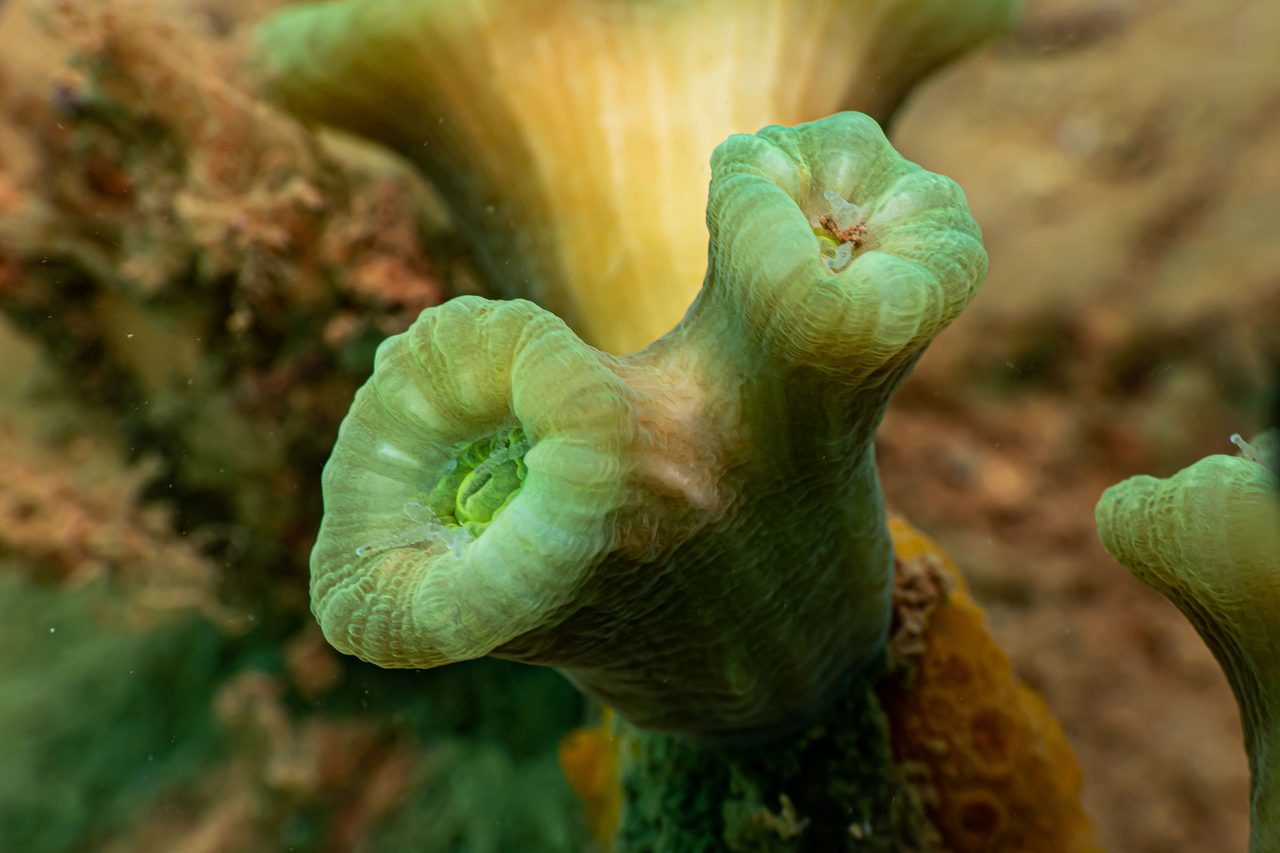
Caulastraea curvata features curved, tubular polyps that typically display alternating bands of red and white (or tan) coloration, resembling candy canes. Polyps are semi-translucent and retract fully when disturbed, and the colony forms dense, branching or clustered structures.
Key facts
- Family
- Dendrophylliidae
- Lighting Requirement
- Medium
- Min tank size
- 30 gallons
- Appearance Description
- Caulastraea curvata features curved, tubular polyps that typically display alternating bands of red and white (or tan) coloration, resembling candy canes. Polyps are semi-translucent and retract fully when disturbed, and the colony forms dense, branching or clustered structures.
- Care difficulty
- Moderate
- Flow Requirement
- Medium
- Coloration
- Green, brown, or pink with trumpet-shaped polyps
- Origin
- Indo-Pacific coral reefs from the Red Sea through Southeast Asia to the Great Barrier Reef and the Line Islands.
- Placement Recommendation
- Middle
- Care Requirements
- • Place in middle zone with moderate lighting (75-150 PAR) • Requires moderate, indirect water flow • Photosynthetic but benefits from occasional target feeding (small meaty foods 1-2×/week) • Prefers stable pH 8.1-8.3 and calcium 400-450 ppm • Keep away from aggressive corals; can sting nearby neighbors
- Feeding Needs
- Light supplemental feeding
- Growth Rate
- Moderate
Research before you buy
ReefDock is the sister app to Reef Trak. Use Reef Trak to research and log coral, keep tank parameters organized, and maintain a complete livestock history. Log this coral on Reef Trak.