
Where to buy Long-Spined Urchin
ReefDock searches the following reef retailers for this invertebrate. Click through to see the live price.
- Search Saltwaterfish
Saltwaterfish
Search this retailer
- Search Amazon
Amazon
Search this retailer
- Search Petco
Petco
Search this retailer
About Long-Spined Urchin
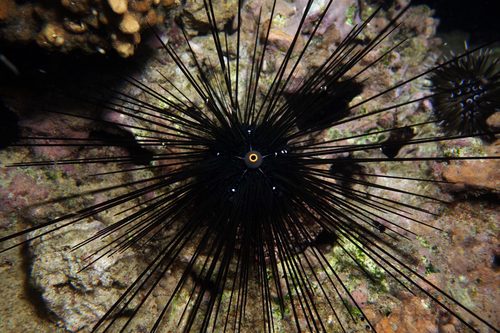
Black or dark purple spherical body covered entirely with long, slender spines that may reach 6 inches in length. Distinctive tube feet project between spines; body diameter typically 3–4 inches.
Key facts
- Origin
- Indo-Pacific from the Red Sea through Southeast Asia to the Hawaiian Islands and Central Pacific reefs.
- Type
- Cleanup
- Max Size
- 12
- Water Parameters
- Temperature: 72-78°F pH: 8.1-8.3 Salinity: 1.023-1.025
- Family
- Diadematidae
- Min tank size
- 55 gallons
- Diet Details
- Primarily herbivorous, grazing on algae. Supplement with macroalgae (kelp, nori) and occasional protein-rich foods like spirulina or frozen phytoplankton in mature tanks with limited natural algae.
- Appearance Description
- Black or dark purple spherical body covered entirely with long, slender spines that may reach 6 inches in length. Distinctive tube feet project between spines; body diameter typically 3–4 inches.
- Compatibility
- Diadema urchins are generally compatible with most fish and invertebrates, but their long spines can damage corals and injure delicate tank-mates. They are territorial and may harass smaller creatures.
- Notes
- Excellent for controlling hair algae. Active during day and night. Temperature range 72-78°F. Needs stable parameters. May knock over unsecured frags. Good for both sand and rock surfaces. Spines can be sharp, handle with care.
- Care Level
- Moderate
- Category
- Urchin
Research before you buy
ReefDock is the sister app to Reef Trak. Use Reef Trak to research and log invertebrates, keep tank parameters organized, and maintain a complete livestock history. Log this invertebrate on Reef Trak.