
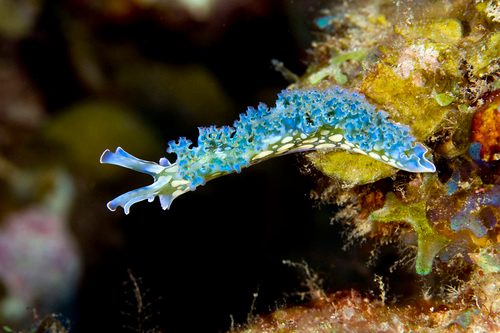
Where to buy Lettuce Sea Slug
ReefDock searches the following reef retailers for this invertebrate. Click through to see the live price.
- Search Saltwaterfish
Saltwaterfish
Search this retailer
- Search Amazon
Amazon
Search this retailer
- Search Petco
Petco
Search this retailer
About Lettuce Sea Slug
Elysia crispata has a flattened, leaf-like body with prominent ruffled, frilly margins (parapodia) ranging in color from bright green to blue-green, often with red or yellow accents. The body is translucent and can reach 2 inches in length.
Key facts
- Compatibility
- Lettuce sea slugs are generally peaceful and compatible with corals and most reef inhabitants. They should not be housed with predatory fish or crustaceans that may consume them.
- Origin
- Western Atlantic, from Florida and the Caribbean to Brazil.
- Min tank size
- 20 gallons
- Appearance Description
- Elysia crispata has a flattened, leaf-like body with prominent ruffled, frilly margins (parapodia) ranging in color from bright green to blue-green, often with red or yellow accents. The body is translucent and can reach 2 inches in length.
- Max Size
- 3
- Type
- Other
- Diet Details
- These slugs are obligate herbivores feeding primarily on macroalgae, especially Caulerpa and Ulva species. They obtain zooxanthellae from consumed algae and incorporate it into their own tissues for photosynthesis.
- Water Parameters
- Temperature: 72-78°F pH: 8.1-8.3 Salinity: 1.023-1.025
- Category
- Other
- Family
- Placobranchidae
- Notes
- • Minimum 20 gallon tank with strong water flow and excellent filtration • Maintain temperature 72–78 °F, pH 8.1–8.3, and salinity 1.023–1.025 • Feed primarily on macroalgae, especially green hair algae and Caulerpa species; supplement with nori if algae depletes • Nocturnal and shy; provide hiding spots and low lighting to reduce stress • Remove any predatory fish or aggressive invertebrates that may attack the slug
- Care Level
- Moderate
Research before you buy
ReefDock is the sister app to Reef Trak. Use Reef Trak to research and log invertebrates, keep tank parameters organized, and maintain a complete livestock history. Log this invertebrate on Reef Trak.