
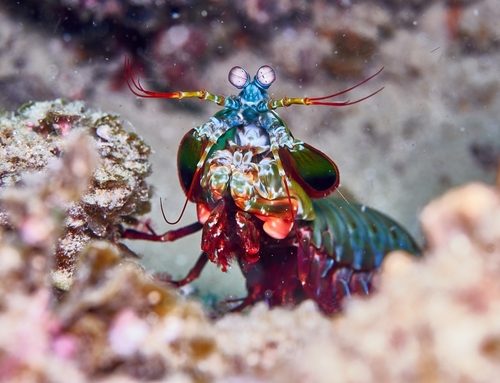
Where to buy Mantis Shrimp (Peacock)
ReefDock searches the following reef retailers for this invertebrate. Click through to see the live price.
- Search Saltwaterfish
Saltwaterfish
Search this retailer
- Search Amazon
Amazon
Search this retailer
- Search Petco
Petco
Search this retailer
About Mantis Shrimp (Peacock)
A large, colorful stomatopod with a vibrant peacock-blue body, green and orange stripes on the raptorial claws, and iridescent segments along the abdomen. Reaches 4 inches and is highly recognizable by its flattened body and powerful raptorial strike appendages.
Key facts
- Max Size
- 7
- Notes
- • Minimum 75 gallon tank with plenty of rubble and hiding places for burrowing • Temperature range 72–78°F; maintain stable conditions with no sudden swings • Require meaty live or frozen foods: small crustaceans, fish, mollusks; feed 2–3 times weekly • Nocturnal and territorial; keep singly and avoid overcrowding • pH 8.1–8.4, salinity 1.023–1.026; excellent filtration and water changes essential
- Water Parameters
- Temperature: 72-78°F pH: 8.1-8.4 Salinity: 1.023-1.026
- Min tank size
- 75 gallons
- Appearance Description
- A large, colorful stomatopod with a vibrant peacock-blue body, green and orange stripes on the raptorial claws, and iridescent segments along the abdomen. Reaches 4 inches and is highly recognizable by its flattened body and powerful raptorial strike appendages.
- Care Level
- Expert
- Type
- Shrimp
- Family
- Stomatopodidae
- Compatibility
- Mantis shrimp are highly aggressive and territorial. They will hunt and kill most fish and invertebrates, making them only suitable for species-only or very large predator tanks.
- Origin
- Indo-Pacific from the Red Sea through Southeast Asia to the Great Barrier Reef and Australia.
- Diet Details
- Carnivorous predators that consume crustaceans, mollusks, and fish. Feed frozen or live prey such as shrimp, crab, and small fish 2-3 times weekly.
- Category
- Predator
Research before you buy
ReefDock is the sister app to Reef Trak. Use Reef Trak to research and log invertebrates, keep tank parameters organized, and maintain a complete livestock history. Log this invertebrate on Reef Trak.