
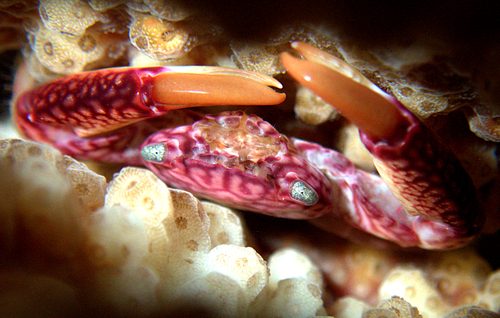
Where to buy Candy Cane Coral Crab
ReefDock searches the following reef retailers for this invertebrate. Click through to see the live price.
- Search Saltwaterfish
Saltwaterfish
Search this retailer
- Search Amazon
Amazon
Search this retailer
- Search Petco
Petco
Search this retailer
About Candy Cane Coral Crab
Small red or orange crabs with white or pale banding across the claws and legs, resembling candy cane striping. Body width typically 0.5–0.75 inches, with a somewhat flattened, compact form adapted for living within coral branches.
Key facts
- Origin
- Indo-Pacific coral reefs from the Red Sea to Hawaii and the Great Barrier Reef, found exclusively on branching corals.
- Diet Details
- Omnivorous scavenger that feeds on detritus, algae, small invertebrates, and leftover food. Benefits from occasional supplemental feedings with sinking pellets or frozen foods.
- Category
- Cleaner
- Min tank size
- 20 gallons
- Appearance Description
- Small red or orange crabs with white or pale banding across the claws and legs, resembling candy cane striping. Body width typically 0.5–0.75 inches, with a somewhat flattened, compact form adapted for living within coral branches.
- Care Level
- Moderate
- Family
- Trapeziidae
- Compatibility
- Generally reef-safe when well-fed, but may nip at soft corals or consume small invertebrates if hungry. Best housed with non-aggressive tank-mates in established reefs.
- Type
- Crab
- Water Parameters
- Temperature: 75-80°F pH: 8.1-8.3 Salinity: 1.023-1.026
- Max Size
- 1
- Notes
- • Symbiotic with branching corals (Acropora, Pocillopora); requires live coral hosts to thrive • Feeds on coral mucus, small zooplankton, and detritus—generally non-destructive to healthy corals • Minimum 20 gallon tank with robust branching corals and stable flow • Maintain temperature 75–80°F, pH 8.1–8.3, salinity 1.023–1.026 • Avoid aggressive tank mates and sudden water parameter swings; otherwise hardy once established
Research before you buy
ReefDock is the sister app to Reef Trak. Use Reef Trak to research and log invertebrates, keep tank parameters organized, and maintain a complete livestock history. Log this invertebrate on Reef Trak.