
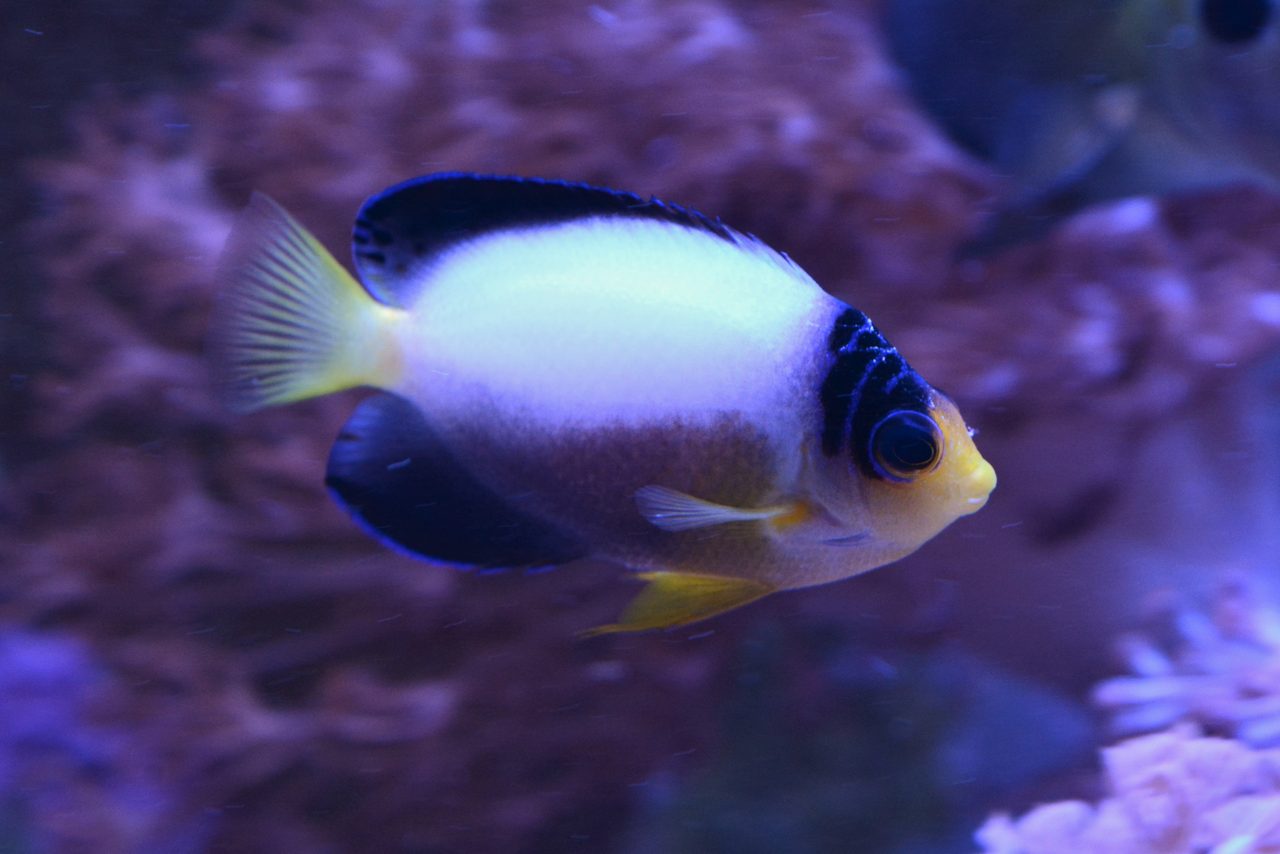
Where to buy Multicolor Angelfish
ReefDock searches the following reef retailers for this fish. Click through to see the live price.
- Search Saltwaterfish
Saltwaterfish
Search this retailer
- Search Amazon
Amazon
Search this retailer
- Search Petco
Petco
Search this retailer
About Multicolor Angelfish
The Multicolor Angelfish is a small dwarf angelfish with a vibrant, multi-colored body featuring bright yellow, orange, red, and blue vertical bands and patches. It has a laterally compressed body shape typical of pomacanthids, with a small rounded snout and continuous dorsal and anal fins.
Key facts
- Diet
- omnivore
- Origin
- Indo-Pacific region from the Indonesia and Philippines eastward through Micronesia and Polynesia, including areas around Samoa and American Samoa.
- Common Health Issues
- Ich (white spot disease), head and lateral line erosion (HLLE), parasitic infections, gill disease
- Max Size
- 3.5
- Diet Details
- Feed a varied diet of high-quality flaked foods, pellets, and frozen foods (mysis shrimp, brine shrimp, frozen algae-based preparations). Supplement with vegetable matter and live food occasionally to maintain health and coloration.
- Care Requirements
- • 70-gallon minimum tank; deeper than wide preferred • SG 1.023-1.025, pH 8.1-8.4, temp 74-80°F • Moderate to strong lighting (LED or metal halide) • Plenty of live rock caves & crevices for shelter • Peaceful community; may be aggressive toward similar dwarf angels
- Difficulty Level
- Moderately challenging for beginners. Requires stable water conditions, a well-established reef or fish-only tank, and careful monitoring of water quality. Aggression toward conspecifics and some other fish can develop over time.
- Family
- Pomacanthidae
- Water Parameters
- Temperature: 72-78°F pH: 8.1-8.3 Salinity: 1.02-1.025
- Feeding Schedule
- 2-3 times daily
- Care Level
- Moderate
- Reef safety
- Reef Safe with Caution
Research before you buy
ReefDock is the sister app to Reef Trak. Use Reef Trak to research and log fish, keep tank parameters organized, and maintain a complete livestock history. Log this fish on Reef Trak.