
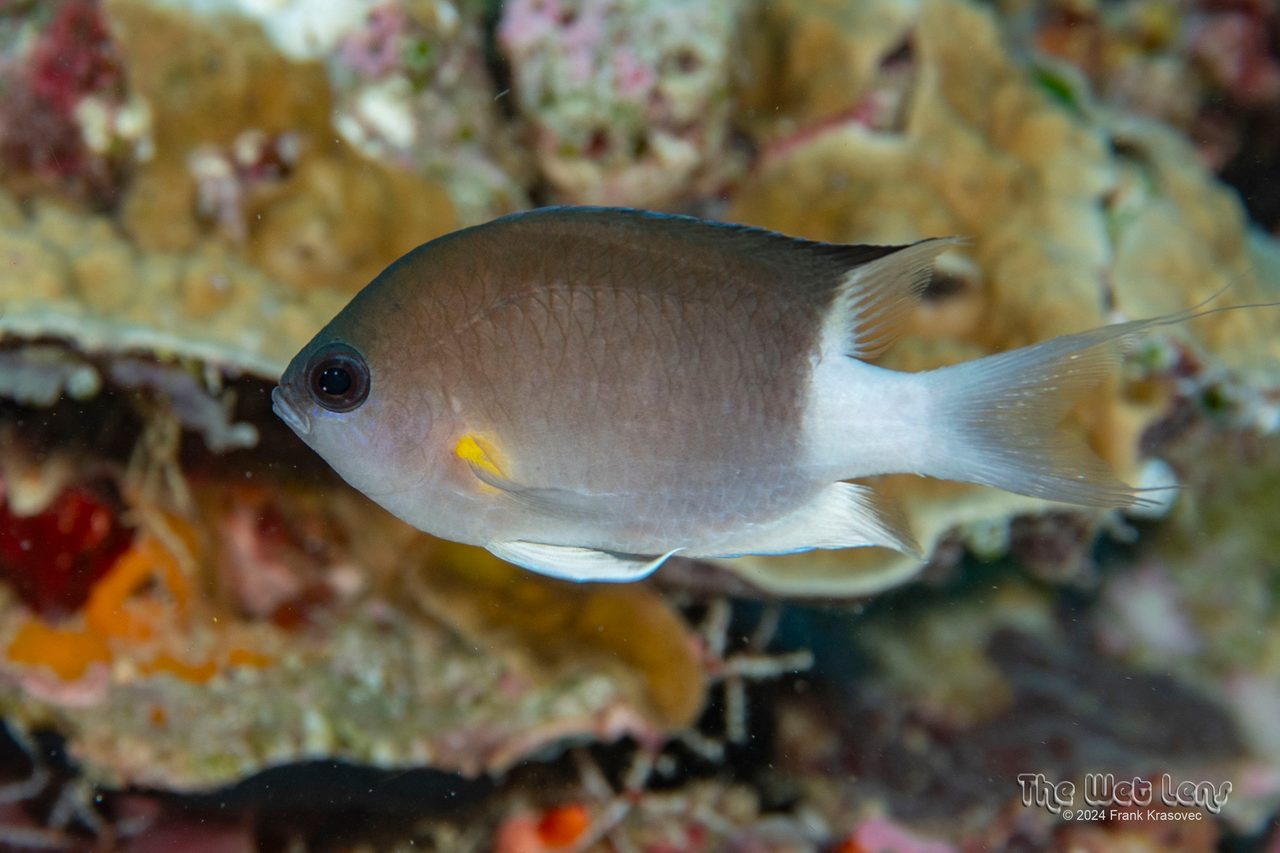
Where to buy Pearl-Fin Chromis
ReefDock searches the following reef retailers for this fish. Click through to see the live price.
- Search Saltwaterfish
Saltwaterfish
Search this retailer
- Search Amazon
Amazon
Search this retailer
- Search Petco
Petco
Search this retailer
About Pearl-Fin Chromis
A small damselfish with a dark body coloration ranging from charcoal to bluish-black, distinguished by bright yellow pectoral fins that give the species its common name. The body is compressed laterally with a streamlined profile typical of Chromis species.
Key facts
- Appearance
- A small damselfish with a dark body coloration ranging from charcoal to bluish-black, distinguished by bright yellow pectoral fins that give the species its common name. The body is compressed laterally with a streamlined profile typical of Chromis species.
- Min tank size
- 30 gallons
- Water Parameters
- Temperature: 72-78°F pH: 8.1-8.3 Salinity: 1.023-1.026
- Feeding Schedule
- 2-3 times daily
- Diet
- omnivore
- Difficulty Level
- Pearl-Fin Chromis are hardy, peaceful fish suitable for intermediate to advanced reef aquarists. They adapt well to stable reef conditions and pose no threat to corals or most tank mates.
- Reef safety
- Reef Safe
- Care Requirements
- • Minimum 30 gallon tank • Temperature range: 72–78°F • Salinity: 1.023–1.026 SG • Keep in groups of 3–5 individuals for best behavior; they are social and more confident in numbers • Provide plenty of live rock for shelter and grazing surfaces • Feed 2–3 times daily with varied marine fare including frozen mysis and small pellets
- Origin
- Indo-Pacific region, including the Philippines, Indonesia, and the Great Barrier Reef area. Found in coral reef environments at moderate depths.
- Temperament
- Peaceful
- Diet Details
- Feed a varied diet of high-quality marine flakes, small pellets, and frozen foods such as mysis shrimp and brine shrimp. Supplement with occasional vegetable matter or herbivorous preparations.
- Max Size
- 3
Research before you buy
ReefDock is the sister app to Reef Trak. Use Reef Trak to research and log fish, keep tank parameters organized, and maintain a complete livestock history. Log this fish on Reef Trak.