
Where to buy Areolate Grouper
ReefDock searches the following reef retailers for this fish. Click through to see the live price.
- Search Saltwaterfish
Saltwaterfish
Search this retailer
- Search Amazon
Amazon
Search this retailer
- Search Petco
Petco
Search this retailer
About Areolate Grouper
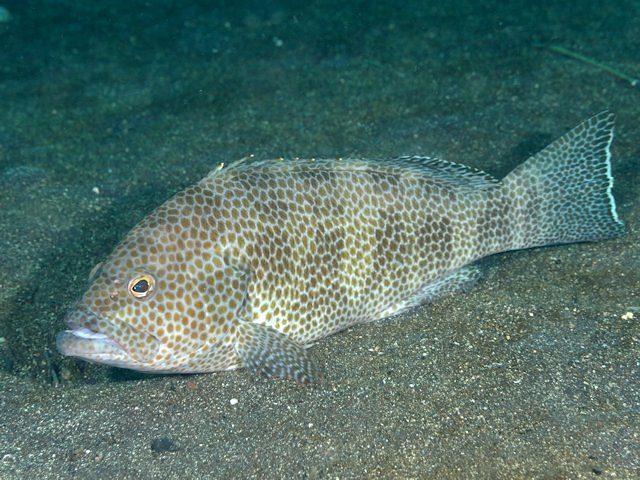
The Areolate Grouper is a moderately sized serranid with a stocky, robust body. It displays brown to grayish coloration with distinctive irregular areolate (net-like) patterns and spots covering the body and fins. The head is large with a relatively small mouth compared to some grouper species.
Key facts
- Family
- Serranidae
- Reef safety
- Not Reef Safe
- Water Parameters
- Temperature: 72-82°F pH: 8.1-8.3 Salinity: 1.02-1.025
- Diet
- carnivore
- Common Health Issues
- Parasitic infections, bacterial infections, lateral line disease, fin rot
- Care Requirements
- • Minimum 180 gallon tank with excellent filtration and water quality • Temperature range 72–82°F; pH 8.1–8.3; Salinity 1.020–1.025 SG • Provide plenty of rockwork and hiding spaces; groupers are reclusive predators • Do not house with small fish, invertebrates, or ornamental shrimp—all will be predated • Aggressive toward conspecifics and similarly-sized fish; keep singly • Requires strong water flow and regular protein-rich feeding; juveniles feed 1–2 times daily, adults every 1–2 days
- Care Level
- Hard
- Temperament
- Aggressive
- Min tank size
- 180 gallons
- Appearance
- The Areolate Grouper is a moderately sized serranid with a stocky, robust body. It displays brown to grayish coloration with distinctive irregular areolate (net-like) patterns and spots covering the body and fins. The head is large with a relatively small mouth compared to some grouper species.
- Difficulty Level
- Moderate - Areolate Grouper requires standard marine aquarium maintenance and intermediate fish keeping skills.
- Diet Details
- Feed meaty foods including high-quality frozen or live fish, shrimp, and squid. Juveniles may accept smaller prey items; adults require larger portions. Feed 1-2 times daily for younger specimens; reduce to every other day as they mature.
Research before you buy
ReefDock is the sister app to Reef Trak. Use Reef Trak to research and log fish, keep tank parameters organized, and maintain a complete livestock history. Log this fish on Reef Trak.