
Where to buy Peacock Grouper
ReefDock searches the following reef retailers for this fish. Click through to see the live price.
- Search Saltwaterfish
Saltwaterfish
Search this retailer
- Search Amazon
Amazon
Search this retailer
- Search Petco
Petco
Search this retailer
About Peacock Grouper
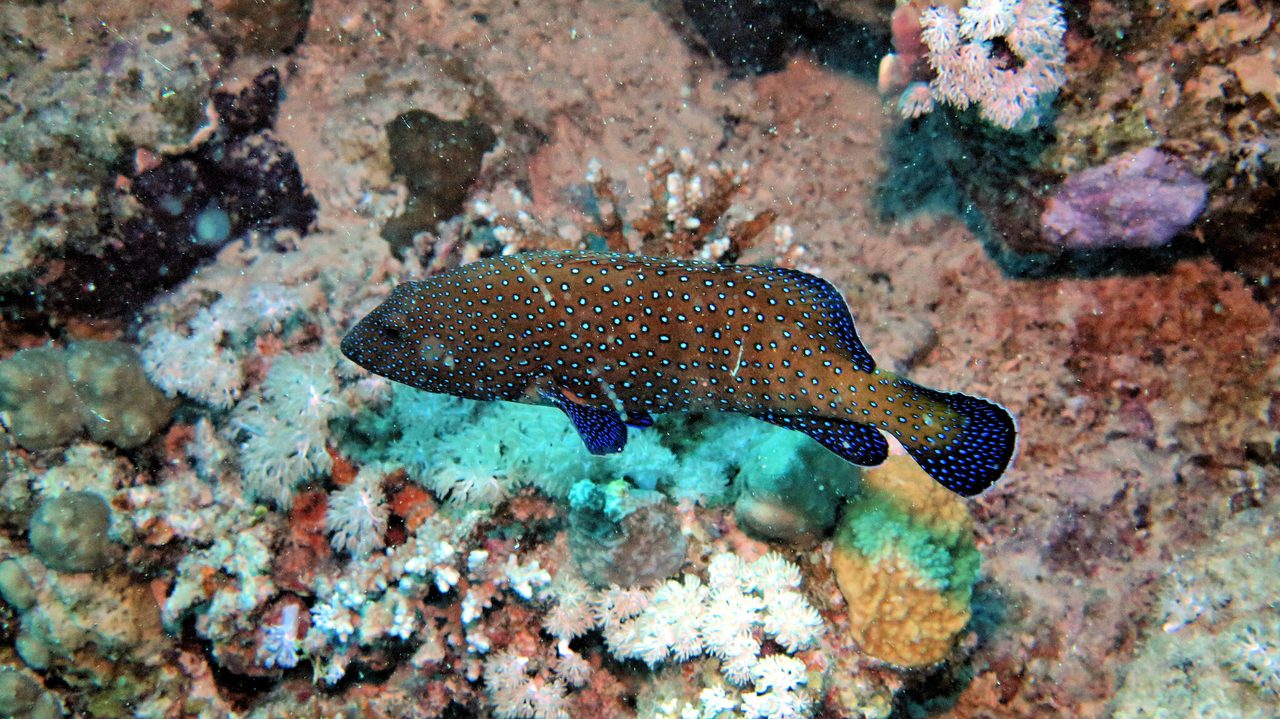
The Peacock Grouper is a large, robust grouper with a distinctive coloration pattern featuring a cream or tan body overlaid with irregular dark bars and blotches that give it a mottled appearance. The fins are dark with lighter bands, and the head is broad and muscular with a large mouth typical of piscivorous groupers. Adult specimens display intensifying coloration as they mature, with some individuals showing deeper orange or reddish tones on the head and body.
Key facts
- Feeding Schedule
- 1-2 times daily
- Appearance
- The Peacock Grouper is a large, robust grouper with a distinctive coloration pattern featuring a cream or tan body overlaid with irregular dark bars and blotches that give it a mottled appearance. The fins are dark with lighter bands, and the head is broad and muscular with a large mouth typical of piscivorous groupers. Adult specimens display intensifying coloration as they mature, with some individuals showing deeper orange or reddish tones on the head and body.
- Water Parameters
- Temperature: 72-80°F pH: 8.1-8.3 Salinity: 1.02-1.025
- Origin
- Indo-Pacific region from East Africa and the Red Sea to the Great Barrier Reef and across to Japan and the Philippines. Found in coral reef environments at depths typically between 5–200 meters.
- Temperament
- Aggressive
- Difficulty Level
- The Peacock Grouper is a challenging species requiring expert care: it demands a very large aquarium, is highly predatory and aggressive toward tankmates, and will consume anything small enough to fit in its large mouth. Only experienced aquarists with dedicated large systems should attempt this species.
- Diet Details
- Feed a diet of meaty foods including frozen or fresh fish, shrimp, squid, and other marine flesh. Live feeder fish may be offered occasionally but are not necessary. Feed juveniles 2–3 times daily; reduce to once daily for adults as they grow.
- Diet
- carnivore
- Reef safety
- Not Reef Safe
- Care Level
- Hard
- Common Health Issues
- Parasitic infections (ich, marine velvet), bacterial infections, poor water quality sensitivity, overcrowding stress
- Min tank size
- 300 gallons
Research before you buy
ReefDock is the sister app to Reef Trak. Use Reef Trak to research and log fish, keep tank parameters organized, and maintain a complete livestock history. Log this fish on Reef Trak.