
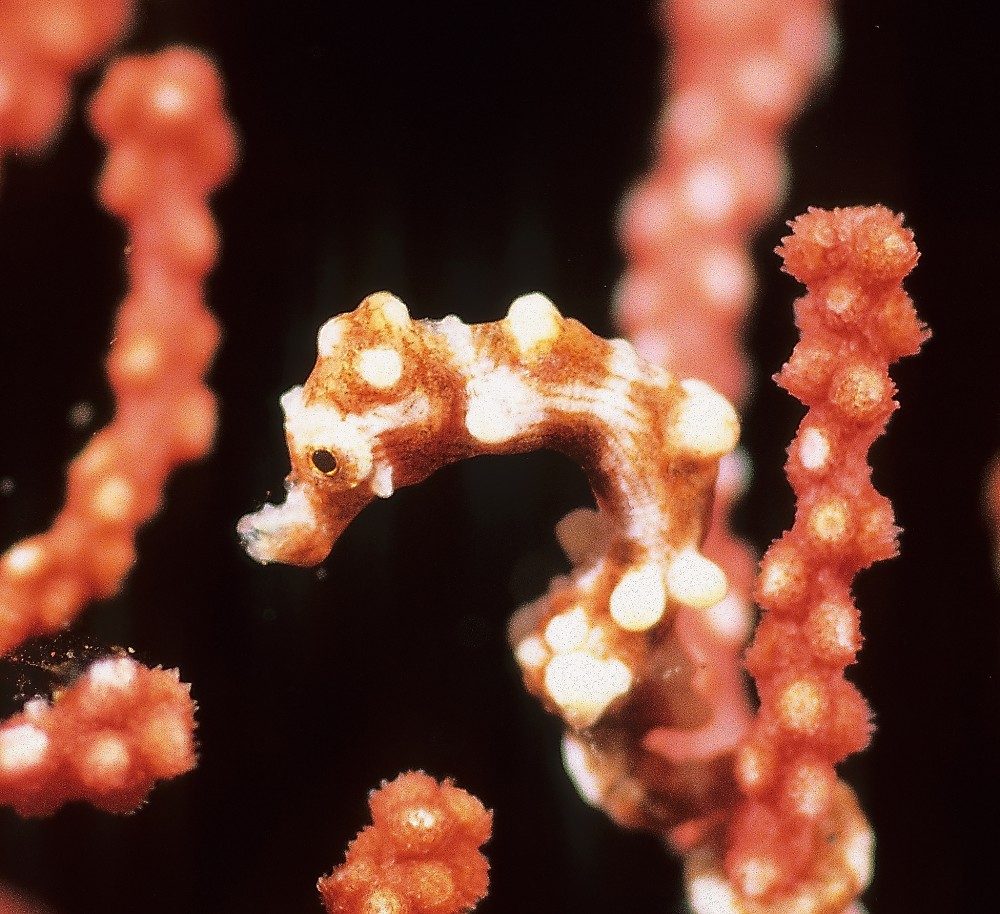
Where to buy Denise's Pygmy Seahorse
ReefDock searches the following reef retailers for this fish. Click through to see the live price.
- Search Saltwaterfish
Saltwaterfish
Search this retailer
- Search Amazon
Amazon
Search this retailer
- Search Petco
Petco
Search this retailer
About Denise's Pygmy Seahorse
One of the smallest seahorse species, reaching only 1.5 inches (3.8 cm) in length. Body color varies from yellow to pale pink or cream, often with faint darker bands or spots. The body is slender with a prehensile tail, crown-like dorsal fin, and elaborate appendages (cirri) covering the body for camouflage among seagrass and soft corals.
Key facts
- Common Health Issues
- Marine ich, Fin Rot, Swim Bladder Disorder, Hole-in-the-Head, Columnaris Disease
- Origin
- Indo-Pacific region, from Indonesia and the Philippines to the Great Barrier Reef and the Coral Triangle, typically found in coastal reefs at depths of 5–40 meters.
- Family
- Syngnathidae
- Water Parameters
- Temperature: 72-78°F pH: 8.1-8.3 Salinity: 1.023-1.025
- Min tank size
- 20 gallons
- Appearance
- One of the smallest seahorse species, reaching only 1.5 inches (3.8 cm) in length. Body color varies from yellow to pale pink or cream, often with faint darker bands or spots. The body is slender with a prehensile tail, crown-like dorsal fin, and elaborate appendages (cirri) covering the body for camouflage among seagrass and soft corals.
- Feeding Schedule
- 3-4 times daily
- Max Size
- 1.5
- Difficulty Level
- Denise's Pygmy Seahorses are extremely challenging for most hobbyists due to their tiny size, specific dietary needs (constant availability of copepods), sensitivity to strong water movement, and specialized tank requirements. They require an expert-level setup and are best maintained by experienced aquarists with dedicated copepod cultures.
- Reef safety
- Reef Safe
- Diet Details
- Feed small live prey primarily: copepods, amphipods, and other zooplankton. In captivity, accept enriched frozen copepods and specialized seahorse food. Require frequent small feedings (3–4 times daily) of high-quality, tiny food items to maintain health.
- Temperament
- Peaceful
Research before you buy
ReefDock is the sister app to Reef Trak. Use Reef Trak to research and log fish, keep tank parameters organized, and maintain a complete livestock history. Log this fish on Reef Trak.