
Where to buy Whitetip Soldierfish
ReefDock searches the following reef retailers for this fish. Click through to see the live price.
- Search Saltwaterfish
Saltwaterfish
Search this retailer
- Search Amazon
Amazon
Search this retailer
- Search Petco
Petco
Search this retailer
About Whitetip Soldierfish
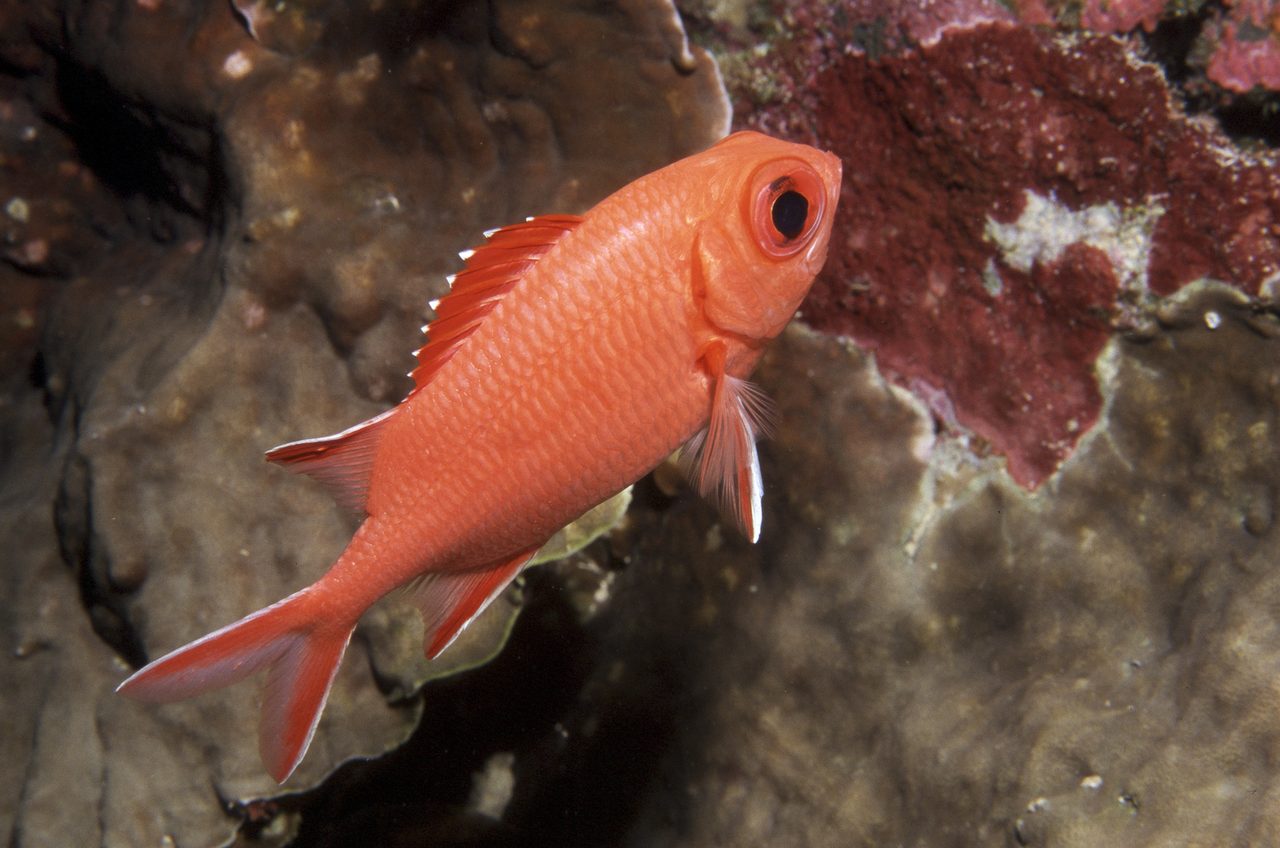
The Whitetip Soldierfish is a compact, deep-bodied fish with bright red coloration on the head and body, accented by silvery-white scales along the sides. Distinctive white-tipped dorsal and anal fin spines give the species its common name. Large eyes are characteristic of nocturnal soldierfishes.
Key facts
- Diet Details
- Feed small meaty foods including finely chopped frozen fish, mysis shrimp, and copepods. Offer food 2-3 times daily in small portions. Soldierfishes are nocturnal and feed primarily at dusk and dawn.
- Temperament
- Peaceful
- Origin
- Indo-Pacific region, including the Red Sea, East Africa, and extending to the Hawaiian Islands and Great Barrier Reef. Found in reef environments throughout tropical Indo-Pacific waters.
- Common Health Issues
- Ich (white spot disease), bacterial infections, parasites in poorly maintained systems
- Family
- Holocentridae
- Care Level
- Moderate
- Max Size
- 8
- Water Parameters
- Temperature: 72-78°F pH: 8.1-8.3 Salinity: 1.023-1.025
- Min tank size
- 75 gallons
- Appearance
- The Whitetip Soldierfish is a compact, deep-bodied fish with bright red coloration on the head and body, accented by silvery-white scales along the sides. Distinctive white-tipped dorsal and anal fin spines give the species its common name. Large eyes are characteristic of nocturnal soldierfishes.
- Care Requirements
- • Minimum 75g tank; prefers 100g+ with plenty of rockwork • Water: 72-78°F, pH 8.1-8.3, SG 1.020-1.025 • Nocturnal; provide caves and dim lighting; feeds on small fish, shrimp • Gentle but territorial with conspecifics; best kept singly • Stable parameters essential; moderate water flow
- Reef safety
- Reef Safe with Caution
Research before you buy
ReefDock is the sister app to Reef Trak. Use Reef Trak to research and log fish, keep tank parameters organized, and maintain a complete livestock history. Log this fish on Reef Trak.