
Where to buy Diana's Hogfish
ReefDock searches the following reef retailers for this fish. Click through to see the live price.
- Search Saltwaterfish
Saltwaterfish
Search this retailer
- Search Amazon
Amazon
Search this retailer
- Search Petco
Petco
Search this retailer
About Diana's Hogfish
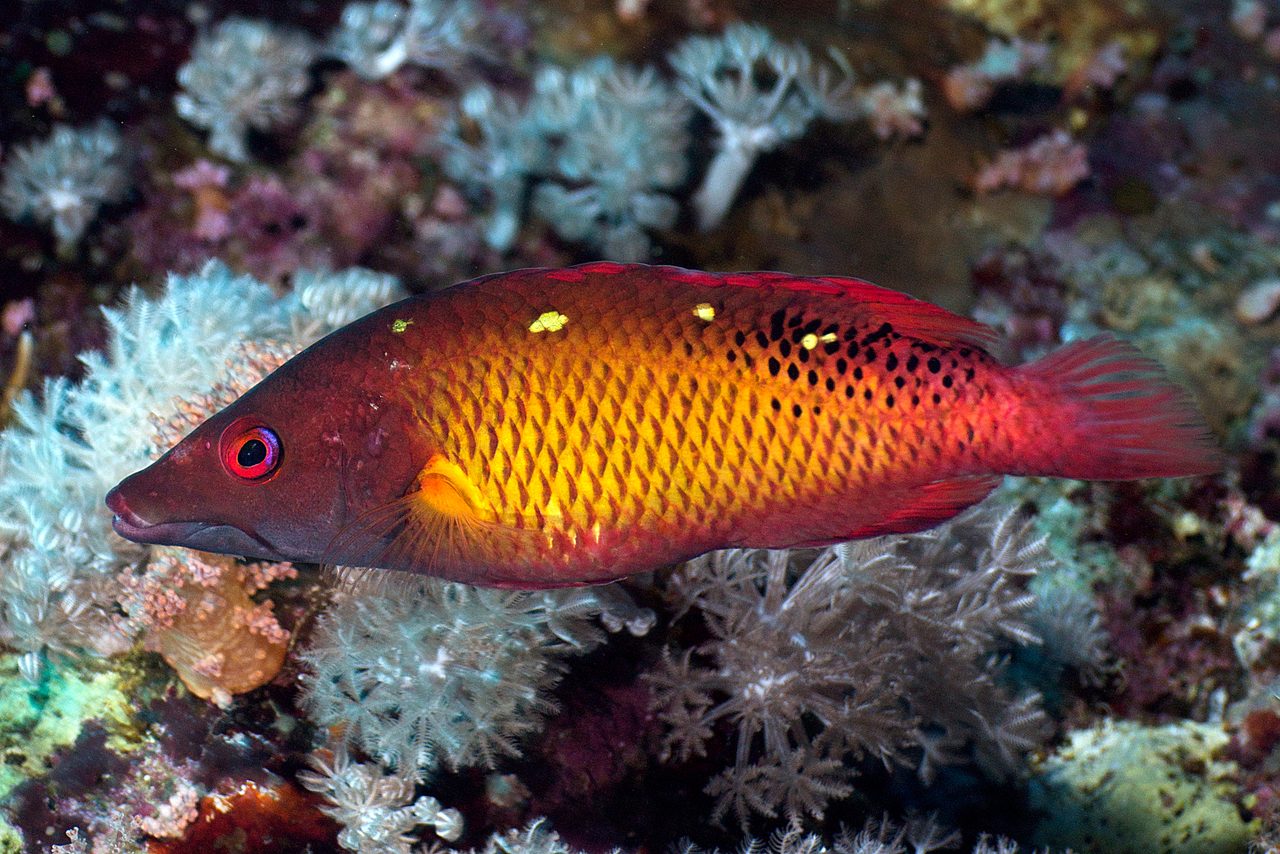
Labrus diana possesses an elongated, slender body. It is primarily red-orange in color with a distinct black stripe extending from its eye to the base of the tail. Notably, it features a yellow stripe along the lateral line and a white band near the caudal fin.
Key facts
- Diet Details
- Marine algae, copepods, small crustaceans, and fish larvae (wild and aquarium)
- Max Size
- 7
- Origin
- Labrus diana is naturally found in the Mediterranean Sea, specifically along the coasts of Spain, France, Italy, Croatia, and Greece. This fish typically inhabits coastal waters at depths ranging from 5 to 40 meters.
- Feeding Schedule
- Feed 2-3 times daily
- Care Requirements
- • Minimum 100 gallon tank - Water: 72-78°F, pH 8.1-8.4, Salinity 1.020-1.025 - Setup: Live rock with sand substrate, hiding places, strong water flow
- Common Health Issues
- Marine ich, Fin Rot, Swim Bladder Disorder, Bacterial Infections, Fungal Diseases
- Care Level
- Moderate
- Appearance
- Labrus diana possesses an elongated, slender body. It is primarily red-orange in color with a distinct black stripe extending from its eye to the base of the tail. Notably, it features a yellow stripe along the lateral line and a white band near the caudal fin.
- Difficulty Level
- Moderate - Diana's Hogfish requires standard marine aquarium maintenance and intermediate fish keeping skills.
- Temperament
- Peaceful
- Min tank size
- 100 gallons
- Family
- Labridae
Research before you buy
ReefDock is the sister app to Reef Trak. Use Reef Trak to research and log fish, keep tank parameters organized, and maintain a complete livestock history. Log this fish on Reef Trak.