
Where to buy Blue Star Leopard Wrasse
ReefDock searches the following reef retailers for this fish. Click through to see the live price.
- Search Saltwaterfish
Saltwaterfish
Search this retailer
- Search Amazon
Amazon
Search this retailer
- Search Petco
Petco
Search this retailer
About Blue Star Leopard Wrasse
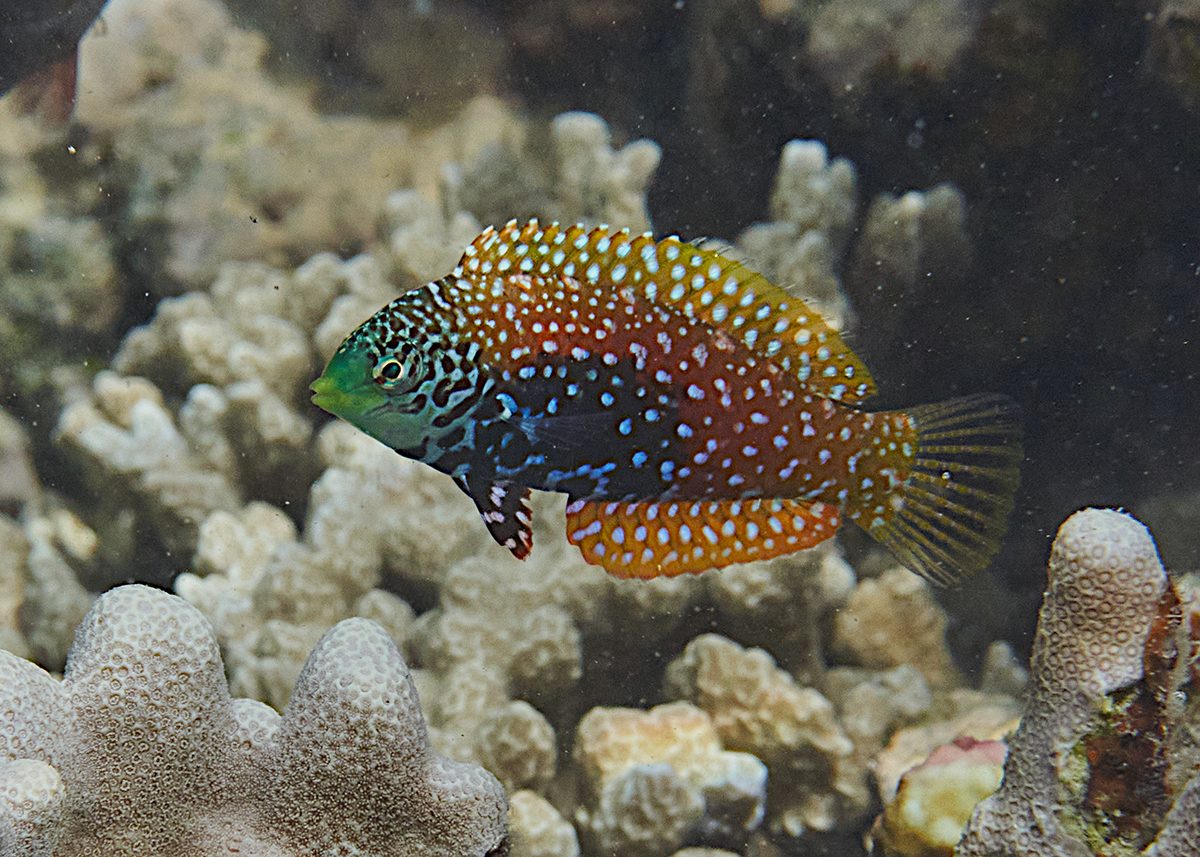
Males display brilliant turquoise-blue coloration with red spots and stripes on the head and body, while females are predominantly orange-red with white bands. Both sexes have the characteristic wrasse body shape—elongated and streamlined with pointed snouts used for hunting small prey in substrate.
Key facts
- Water Parameters
- Temperature: 72-78°F pH: 8.1-8.3 Salinity: 1.02-1.025
- Diet
- carnivore
- Care Requirements
- • Minimum 75-gallon tank with plenty of live rock and sand bed for foraging • Stable water parameters: 72-78°F, pH 8.1-8.3, sg 1.023-1.025 • Requires abundant microfauna; target feed frozen copepods and mysis regularly • Peaceful with most fish but may chase smaller wrasses or harass small invertebrates • Nocturnal forager; provide calm environment with minimal competition
- Feeding Schedule
- 2-3 times daily
- Max Size
- 5.5
- Aka
- Divided Wrasse, Bipartite Leopard Wrasse
- Notes
- Often more common than Meleagris Leopard Wrasse. Requires established tank with plenty of microfauna. May bury in sand when stressed.
- Common Health Issues
- Marine ich, Fin rot, Swim bladder disorder, Bacterial infections, Parasitic infestations
- Appearance
- Males display brilliant turquoise-blue coloration with red spots and stripes on the head and body, while females are predominantly orange-red with white bands. Both sexes have the characteristic wrasse body shape—elongated and streamlined with pointed snouts used for hunting small prey in substrate.
- Reef safety
- Reef Safe with Caution
- Origin
- Indo-Pacific region from Indonesia to the Philippines and westward to the Great Barrier Reef.
- Diet Details
- Primarily a carnivore that feeds on small crustaceans, copepods, and mysis shrimp in captivity. Offer small-sized prepared foods or frozen foods multiple times daily to match its natural feeding behavior of constant grazing on the reef.
Research before you buy
ReefDock is the sister app to Reef Trak. Use Reef Trak to research and log fish, keep tank parameters organized, and maintain a complete livestock history. Log this fish on Reef Trak.