
Where to buy Bulbnose Unicornfish
ReefDock searches the following reef retailers for this fish. Click through to see the live price.
- Search Saltwaterfish
Saltwaterfish
Search this retailer
- Search Amazon
Amazon
Search this retailer
- Search Petco
Petco
Search this retailer
About Bulbnose Unicornfish
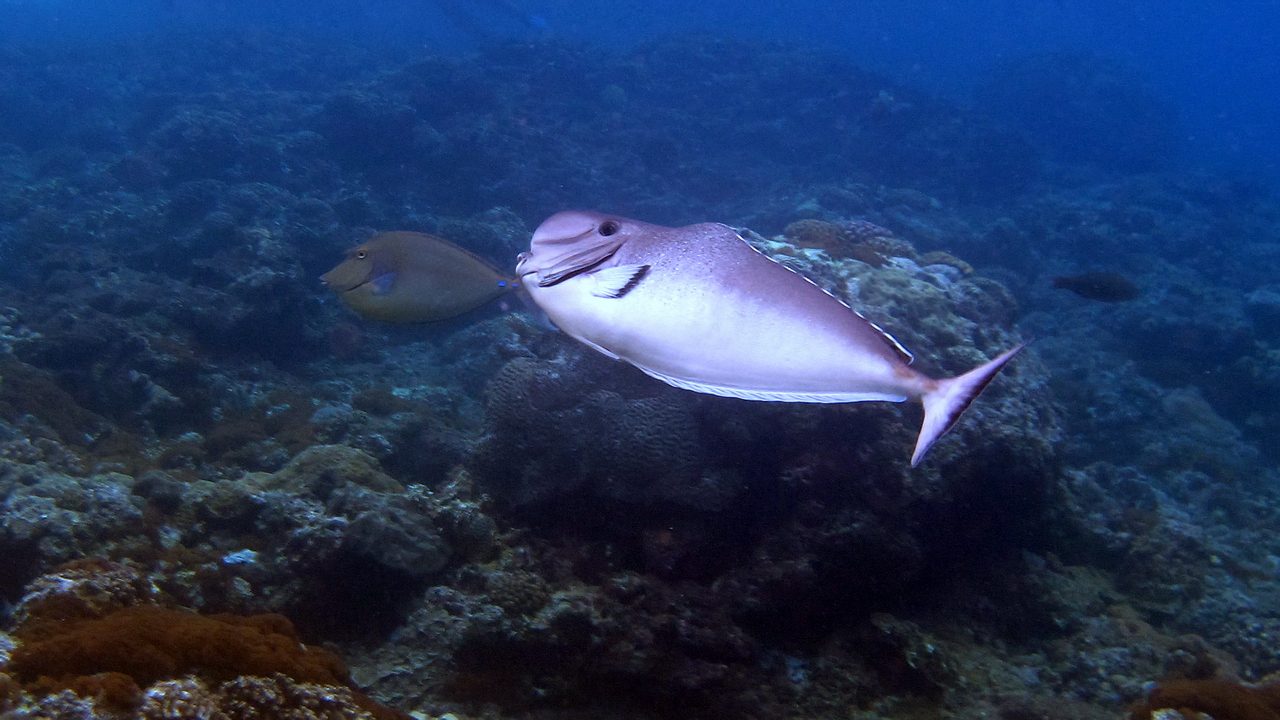
Naso tonganus is a large, elongated tang with a uniform gray-brown to olive-brown body. It is distinguished by a bulbous projection on the forehead and a characteristic bulging snout, which give rise to its common name. The caudal fin is deeply forked and may display yellow or orange coloring.
Key facts
- Difficulty Level
- Moderate - Requires some experience due to specific dietary water or tank requirements. Best suited for intermediate aquarists.
- Appearance
- Naso tonganus is a large, elongated tang with a uniform gray-brown to olive-brown body. It is distinguished by a bulbous projection on the forehead and a characteristic bulging snout, which give rise to its common name. The caudal fin is deeply forked and may display yellow or orange coloring.
- Temperament
- Semi Aggressive
- Min tank size
- 180 gallons
- Care Level
- Expert
- Care Requirements
- • 180 gallon minimum aquarium (active, fast swimmer) • Stable pH 8.1-8.4, salinity 1.020-1.025, temp 72-78°F • Strong, unobstructed water flow and open swimming space • High-quality varied diet: nori, spirulina, meaty foods, quality pellets • May occasionally nip corals or invertebrates; monitor closely
- Common Health Issues
- Marine ich, Fin rot, Swim bladder disorder, Bacterial septicemia, Parasitic infestations
- Origin
- Indo-Pacific from the Great Barrier Reef to the Philippines and Indonesia, with records from Hawaiian Islands.
- Max Size
- 24
- Feeding Schedule
- 2-3 times daily
- Diet Details
- Feed a varied diet of high-quality herbivore pellets, nori sheets, and meaty foods such as mysis shrimp or finely chopped squid. Offer multiple small meals daily to support its active metabolism.
- Diet
- omnivore
Research before you buy
ReefDock is the sister app to Reef Trak. Use Reef Trak to research and log fish, keep tank parameters organized, and maintain a complete livestock history. Log this fish on Reef Trak.