
Where to buy Japanese Anthias
ReefDock searches the following reef retailers for this fish. Click through to see the live price.
- Search Saltwaterfish
Saltwaterfish
Search this retailer
- Search Amazon
Amazon
Search this retailer
- Search Petco
Petco
Search this retailer
About Japanese Anthias
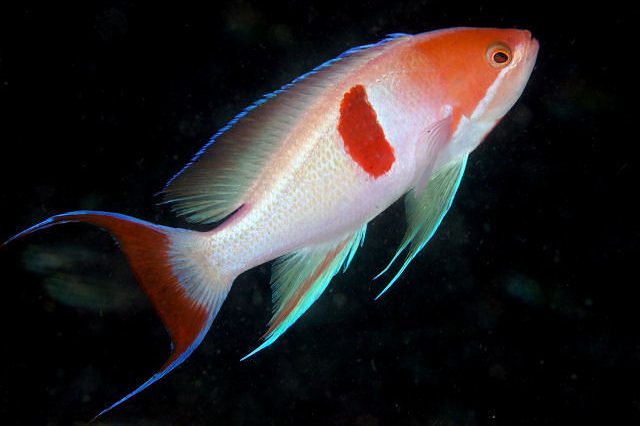
Elongated oval body, predominantly orange-red with white bars on flanks and a conspicuous black spot at base of dorsal fin. Distinctive black margin around tail fin. Pseudanthias japanese, specifically.
Key facts
- Origin
- The Japanese Saddleback Tang (Pseudanthias japanese) is natively found in the western Pacific Ocean, specifically off the coasts of Japan, South Korea, and Taiwan. They inhabit shallow reef environments at depths ranging from 3 to 20 meters.
- Common Health Issues
- Marine Ich, Fin Rot, Swim Bladder Disorder, Hole in the Head Disease, Columnaris
- Diet Details
- Marine algae, zooplankton, small crustaceans (such as mysis shrimp), and various types of fish in both wild and aquarium settings.
- Max Size
- 9
- Diet
- Omnivore
- Reef safety
- Not Reef Safe
- Temperament
- Aggressive
- Appearance
- Elongated oval body, predominantly orange-red with white bars on flanks and a conspicuous black spot at base of dorsal fin. Distinctive black margin around tail fin. Pseudanthias japanese, specifically.
- Min tank size
- 100 gallons
- Difficulty Level
- Moderate - Japanese Anthias requires standard marine aquarium maintenance and intermediate fish keeping skills.
- Care Requirements
- • Minimum 100 gallon tank • 72-78°F temperature • pH 8.1-8.4 • Live rock and corals for hiding places • Moderate to strong water flow
- Feeding Schedule
- Feed 2-3 times daily
Research before you buy
ReefDock is the sister app to Reef Trak. Use Reef Trak to research and log fish, keep tank parameters organized, and maintain a complete livestock history. Log this fish on Reef Trak.