
Where to buy Geographic Wrasse
ReefDock searches the following reef retailers for this fish. Click through to see the live price.
- Search Saltwaterfish
Saltwaterfish
Search this retailer
- Search Amazon
Amazon
Search this retailer
- Search Petco
Petco
Search this retailer
About Geographic Wrasse
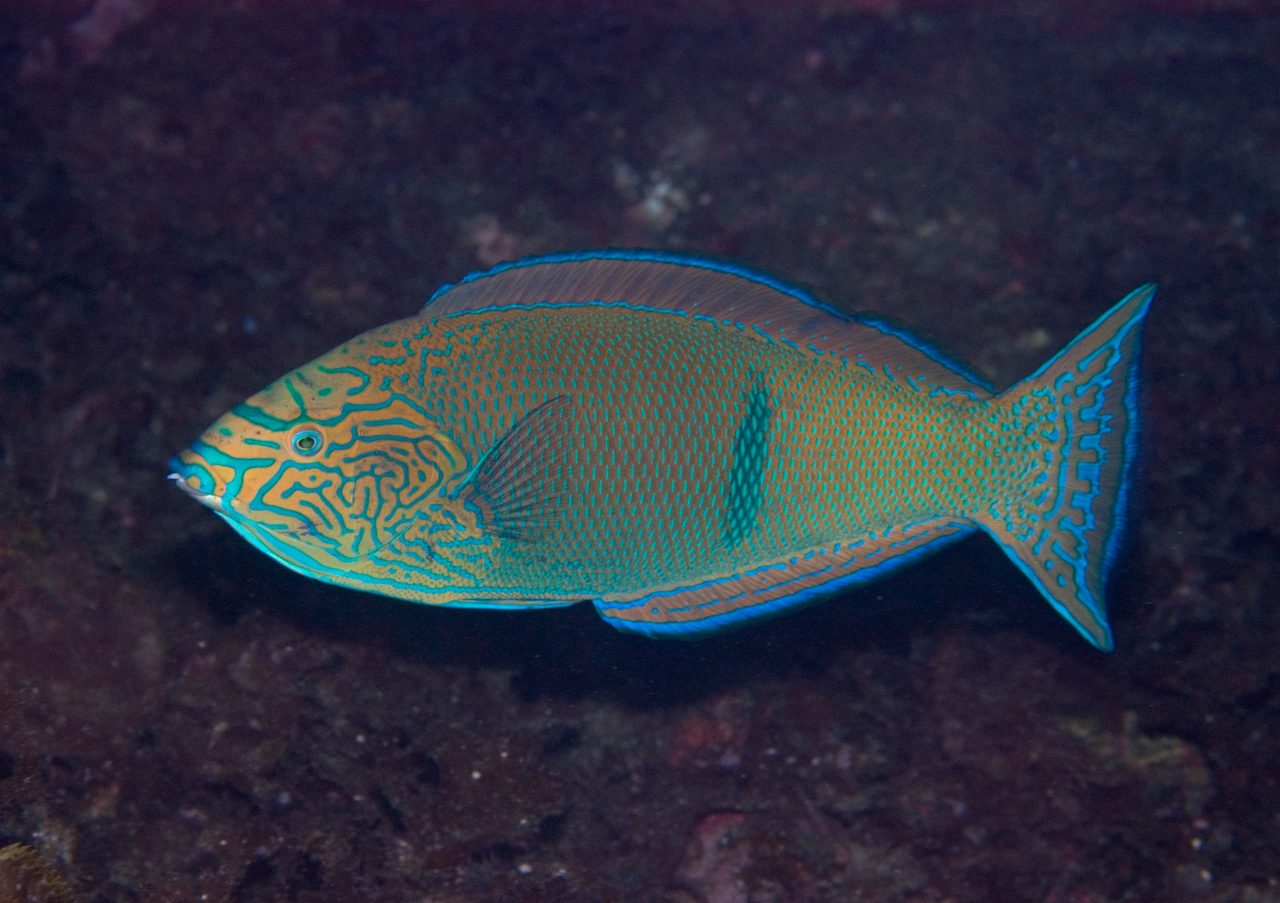
The Geographic Wrasse displays striking coloration with bright green/turquoise head and body marked by distinctive red wavy lines that resemble geographic contours, hence its name. The body is robust and laterally compressed, typical of wrasses, with a pointed snout and sharp teeth.
Key facts
- Max Size
- 9
- Family
- Labridae
- Care Level
- Moderate
- Common Health Issues
- Marine ich, Fin rot, Swim bladder disorder, Bacterial infections, Parasitic infestations
- Origin
- Indo-Pacific from the Red Sea and East Africa to Hawaii and the Central Pacific, typically found on coral reef slopes and drop-offs.
- Diet Details
- Feeds on small crustaceans, mollusks, and other small invertebrates in the wild. In captivity, provide varied meaty foods including mysis shrimp, brine shrimp, and quality carnivore pellets; supplement with frozen copepods and occasionally blanched seaweed for balance.
- Temperament
- Semi Aggressive
- Diet
- carnivore
- Feeding Schedule
- 2-3 times daily
- Reef safety
- Not Reef Safe
- Difficulty Level
- Moderate - Geographic Wrasse requires standard marine aquarium maintenance and intermediate fish keeping skills.
- Care Requirements
- • 75+ gallon aquarium minimum • Temperature 72-78°F, pH 8.1-8.4, Salinity 1.020-1.025 • Strong swimmers requiring open water and rockwork • Feed varied diet: small crustaceans, small fish, prepared foods • Can be aggressive toward smaller fish and wrasses
Research before you buy
ReefDock is the sister app to Reef Trak. Use Reef Trak to research and log fish, keep tank parameters organized, and maintain a complete livestock history. Log this fish on Reef Trak.