
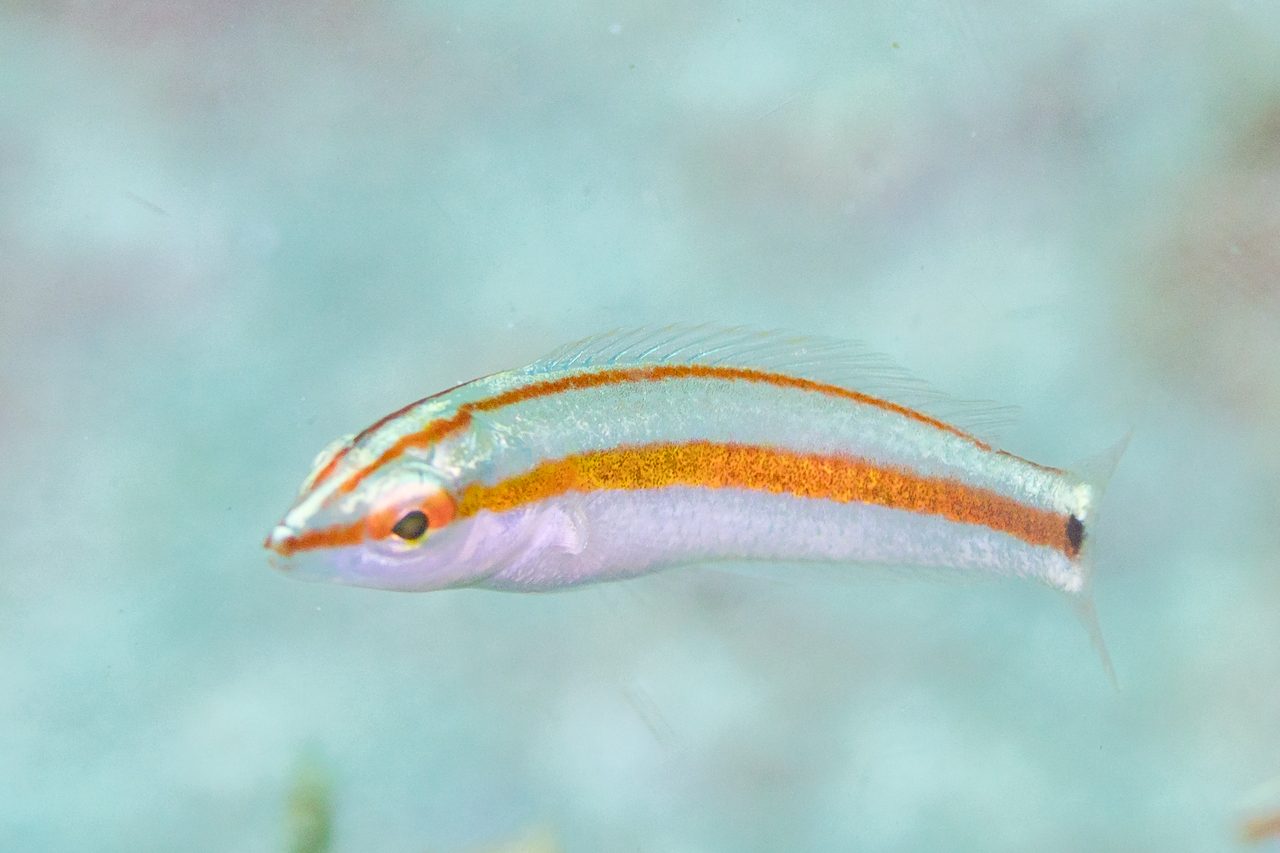
Where to buy Hartzfeld's Wrasse
ReefDock searches the following reef retailers for this fish. Click through to see the live price.
- Search Saltwaterfish
Saltwaterfish
Search this retailer
- Search Amazon
Amazon
Search this retailer
- Search Petco
Petco
Search this retailer
About Hartzfeld's Wrasse
Hartzfeld's Wrasse displays vibrant coloration with a greenish body, yellow-orange markings on the head and chest, and blue accents on the gill covers. It has the typical wrasse body shape: elongated, laterally compressed, with a pointed snout and small protruding teeth.
Key facts
- Care Level
- Moderate
- Family
- Labridae
- Min tank size
- 55 gallons
- Difficulty Level
- Moderate - Hartzfeld's Wrasse requires standard marine aquarium maintenance and intermediate fish keeping skills.
- Temperament
- Semi Aggressive
- Common Health Issues
- Marine ich, Fin rot, Swim bladder disorder, Velvet disease, Hole in the head disease
- Appearance
- Hartzfeld's Wrasse displays vibrant coloration with a greenish body, yellow-orange markings on the head and chest, and blue accents on the gill covers. It has the typical wrasse body shape: elongated, laterally compressed, with a pointed snout and small protruding teeth.
- Reef safety
- Reef Safe with Caution
- Origin
- Indo-Pacific from Indonesia to the Philippines and Palau, found in coral reef environments.
- Diet Details
- Feed a varied diet of small meaty foods including mysis shrimp, copepods, and small crustaceans, supplemented with quality flake and pellet foods. Feed 1-2 times daily in small portions to match natural grazing behavior.
- Care Requirements
- • 55 gallon tank minimum for adult specimens • Stable water parameters: 72-78°F, pH 8.1-8.3, sg 1.020-1.025 • Live rock for hiding and grazing on small crustaceans and algae • Provide varied diet of mysis shrimp, copepods, and quality flake foods • May nip at polyps and small ornamental invertebrates; monitor behavior
- Feeding Schedule
- Feed 2-3 times daily
Research before you buy
ReefDock is the sister app to Reef Trak. Use Reef Trak to research and log fish, keep tank parameters organized, and maintain a complete livestock history. Log this fish on Reef Trak.