
Where to buy Sharpnose Wrasse
ReefDock searches the following reef retailers for this fish. Click through to see the live price.
- Search Saltwaterfish
Saltwaterfish
Search this retailer
- Search Amazon
Amazon
Search this retailer
- Search Petco
Petco
Search this retailer
About Sharpnose Wrasse
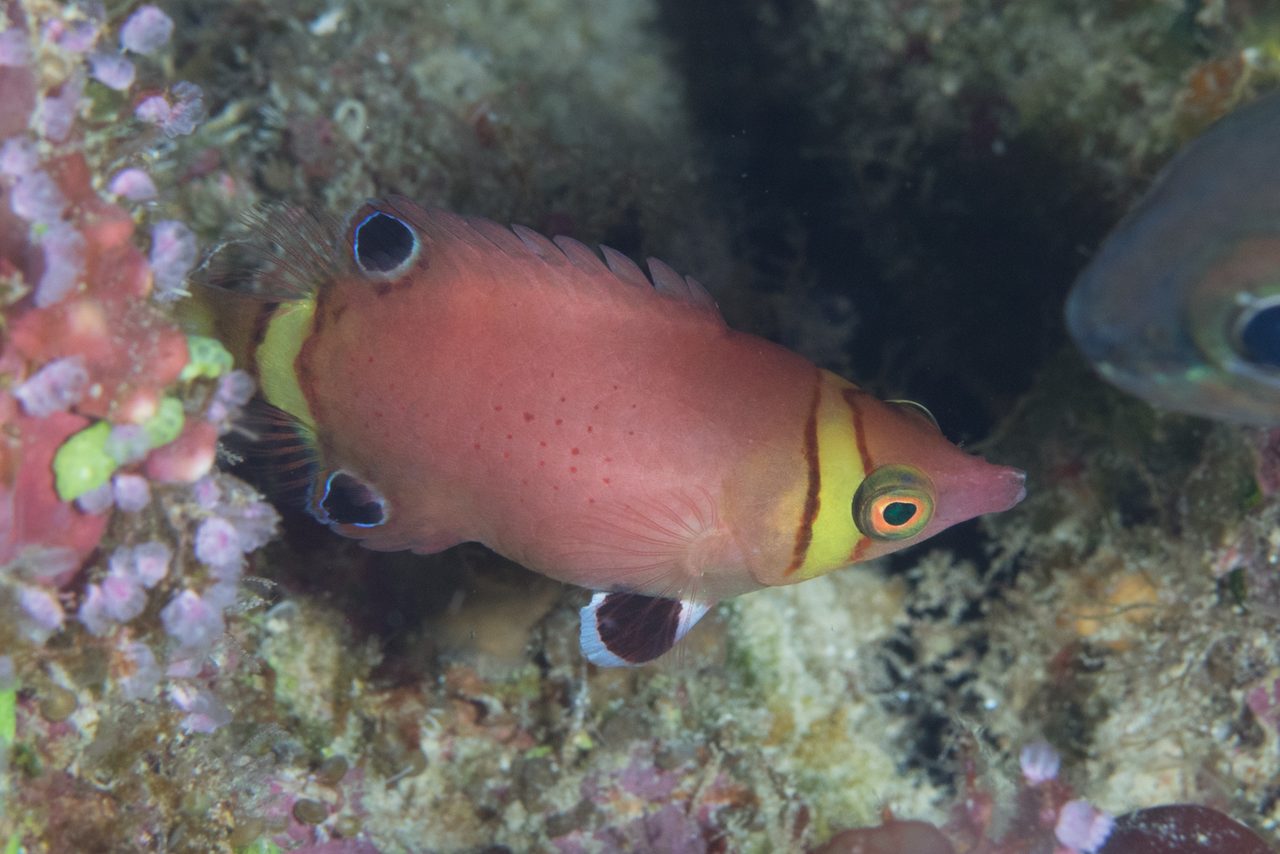
Small, slender wrasse with a predominantly yellow or olive body and distinctive dark (black or dark brown) dorsal and anal fins. The head tapers to a pointed snout, giving it the "sharpnose" common name.
Key facts
- Diet
- carnivore
- Origin
- Indo-Pacific region, including the Philippines, Indonesia, and parts of the Great Barrier Reef.
- Common Health Issues
- Marine Ich, Fin Rot, Swim Bladder Disorder, Hole-in-the-Head, Velvet Disease
- Diet Details
- Feeds on small crustaceans, copepods, amphipods, and small invertebrates in the wild. In captivity, offer quality meaty foods such as mysis shrimp, small frozen foods, and high-quality flake or pellet foods designed for carnivorous fish.
- Max Size
- 5
- Care Requirements
- • 30+ gallon tank minimum, well-established with live rock • Peaceful community species; avoid aggressive wrasses and territorial fish • Prefers moderate flow and varied hiding spots among rockwork • Feed small meaty foods (mysis, copepods) 2-3 times daily • Stable water parameters: 72-78°F, pH 8.1-8.3, sal. 1.023-1.025
- Difficulty Level
- Moderate - Requires some experience due to specific dietary water or tank requirements. Best suited for intermediate aquarists.
- Feeding Schedule
- 1-2 times daily
- Family
- Labridae
- Water Parameters
- Temperature: 72-78°F pH: 8.1-8.3 Salinity: 1.02-1.025
- Care Level
- Moderate
- Reef safety
- Reef Safe
Research before you buy
ReefDock is the sister app to Reef Trak. Use Reef Trak to research and log fish, keep tank parameters organized, and maintain a complete livestock history. Log this fish on Reef Trak.